


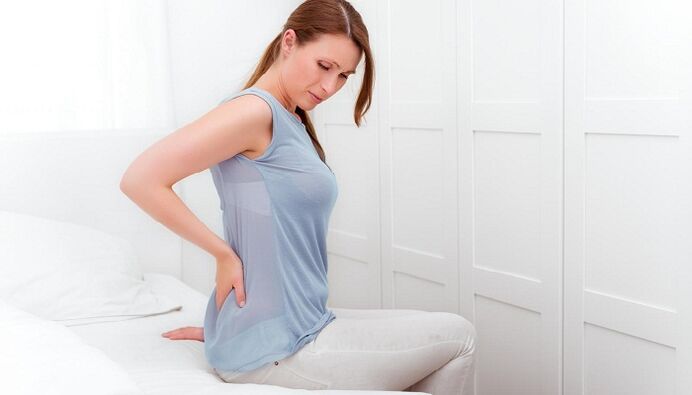
Back pain has been one of the most common complaints among patients receiving emergency and outpatient care in recent years.This pain is not a separate nosological unit, but a clinical manifestation of a number of diseases.What makes this symptom especially serious is that often with acute pain, physical activity is significantly limited and people's ability to work is reduced.
The main cause of back pain is spinal diseases;in addition, such a clinical manifestation can be caused by pathologies of internal organs, professional characteristics (long time sitting at the table or in the driver's seat, heavy physical work), injury or pregnancy.In most cases, it is possible to discover the cause of the pain by carefully examining the patient;sometimes additional tests are needed to establish a diagnosis.Pain syndrome relief depends on the underlying disease and the characteristics of its course;treatment is selected individually for each case.
Medical statistics indicate that more than half of the world's population suffers from back pain.In addition, in childhood, this symptom indicates diseases of internal organs and is quite rare;As we age, back pain occurs more and more frequently and, in old age, almost everyone experiences it and only around 25% of people who suffer from this pathology seek medical advice.
What are the dangers of back pain?
In most cases, prematurely or inappropriately prescribed therapy for back pain leads to chronicity of the process.Chronic back pain is a very common cause of decreased performance in people aged 40 to 55 and is characterized by:
- permanent character;
- increased during movement and physical activity;
- limitation of physical activity;
- development of a feeling of stiffness in the back.
The chronic process is characterized by a relapsing course with frequent episodes of exacerbations caused by prolonged hypothermia, physical activity or remaining in one position.Exacerbations are followed by periods of remission, during which there is no or minimal pain.In most cases, back pain does not pose a direct threat to a person's health or life, but there are serious pathologies of the spine and internal organs that are manifested by this symptom, which require immediate consultation with a specialist.
Back pain due to common illnesses
Common illnesses that manifest as back pain include sciatica and spinal disc herniation.
The severity of pain in these diseases depends on the stage of their progression and the patient's sensitivity threshold.
Radiculitis
Radiculopathy or radiculitis is a symptom complex that develops as a result of compression of the roots of the spinal cord and is manifested by motor and autonomic disorders against the background of severe pain.There are cervical, thoracic and lumbar (lumbosacral) radiculitis.
Clinical manifestations
It manifests itself as a pronounced pain syndrome, localized at the site of the infringement and intensified by movements and coughing (even with a slight cough).The pain can be of different nature (aching, dull or sharp), appear periodically or be constant.In most cases, the pain radiates to the upper or lower extremities.In addition to pain, the disease is characterized by muscle weakness and loss of sensitivity in the limbs.
Disc herniation
The protrusion or prolapse of fragments of intervertebral discs into the spinal canal is called disc herniation.Most often, the disease occurs in people aged 25 to 50;The risk group includes drivers, people who spend long periods sitting and those who are forced to lift heavy objects every day.
Clinical manifestations
The main symptom is pain, which at the beginning of the disease is dull and intermittent and intensifies with physical exertion, coughing and prolonged stay in the same position.As the hernia progresses, the pain increases and radiates into the arm, buttock, or thigh, depending on the location of the hernia.
Causes of pain in people over 50
Almost all elderly people experience back pain;The most common causes of this symptom are the following diseases:
Osteoporosis
Clinical manifestations
The disease is characterized by an asymptomatic or almost imperceptible onset, with symptoms similar to those of osteochondrosis.Often, pathology is already detected with characteristic injuries, or rather fractures, which can occur with minimal load or slight bruising.
It is very difficult to understand the disease at an early stage;usually manifests itself with the following signs:
- pain in the lumbar or thoracic spine, which appears during prolonged static load and during sudden changes in weather conditions;
- hair and nails become brittle;
- the development of non-inflammatory periodontal diseases is possible;
- changes in posture and reduction in height;
- the appearance of leg cramps at night.
Spondylosis
Chronic degenerative dystrophic lesion of the spine, caused by deformation of the vertebrae and the appearance of bony protuberances and spines (osteophytes) on their surface.
Clinical manifestations
In the initial stages, it manifests as a slight limitation in spinal mobility.As the disease progresses, a pronounced pain syndrome develops due to fixation of the area subject to overload.Sharp, unbearable pain is accompanied by muscle tension and limited mobility due to the gradual straightening of the physiological curves of the spine.
Causes of pain in people under 50
Often the following pathologies become the cause of pain in the lumbar or thoracic spine that occurs in youth or middle age:
- sacroiliitis;
- spinal osteomyelitis;
- spondylolisthesis;
- fibrositis.
Sacroiliitis
The inflammatory process located in the sacroiliac joint is called sacroiliitis.The cause of the development of this disease can be injury, increased load on the joint for a long period (during pregnancy, work associated with lifting weights or constant sitting), congenital developmental anomalies, metabolic disorders, neoplasms.
Clinical manifestations
The pain is localized in the pelvic region and spreads along the sciatic nerve on the affected side;it may intensify with pressure on the wing of the ilium and flexion of the limbs.In case of severe pain, the patient takes a forced position with the knees bent.In addition to pain, an increase in body temperature, the development of purulent abscesses and severe intoxication syndrome can be observed.The disease is usually treated in surgical departments.
Spinal osteomyelitis
Osteomyelitis is a purulent infectious disease that affects bone tissue, periosteum and bone marrow.It can be acute (occurring for the first time) or chronic (long-lasting and characterized by periods of exacerbation and remission).
Clinical manifestations
It begins with chills, an increase in body temperature (usually up to 40.0) and an increase in heart rate.After 2 to 4 days, local pain develops at the site of the injury, local swelling and hyperemia (redness) of tissues and limitation of motor activity.In chronic osteomyelitis, there are traces of fistulous tracts on the skin (round wounds with purulent discharge).If you suspect the development of osteomyelitis, seek medical help urgently.This pathology is treated by a surgeon.
Spondylolisthesis
Spondylolisthesis is the anterior displacement of a vertebra as a result of congenital non-fusion of the arch with the body or degenerative changes in the intervertebral disc.In most cases, it develops when the fifth lumbar vertebra is dislocated.
Clinical manifestations
The main manifestation is chronic pain in the lower back, caused by vertebral slippage and pinching of nerve endings.The pain often radiates to the gluteal region and intensifies when trying to straighten.It may be accompanied by leg pain, muscle weakness and numbness in the limbs.
Fibrositis
Fibrositis is a nonspecific inflammatory process characterized by fibrous and fatty degeneration of fibrous connective tissue.The exact cause of the disease has not yet been clarified.More common in middle-aged women.
Clinical manifestations
- moderate or severe and constant back pain;
- headaches;
- neck and shoulder pain;
- pain and stiffness in the spine in the morning;
- sleep disturbance;
- irritability.
The pain intensifies in the cold season when being outdoors, after excessive exercise, after emotional stress, in the morning.
Pain of musculoskeletal origin
The musculoskeletal system, which allows the body to remain in space and move, has spatial and painful sensitivity.Damage to any element of this system, even the smallest, by injury or illness causes the development of pain.Various injuries, excessive physical activity, as well as displacement of the articular processes of the vertebrae lead to the development of an inflammatory process in the tissues of the spine, which becomes the cause of pain.
Pain that radiates to the back and lower back (stenosis)
With stenosis (narrowing of the spinal canal or the exit openings of the spinal nerve roots), in which nerve fibers are compressed, the pain that appears in the back radiates to the leg, while the patient's gait changes, he limps.
The pain is dull and constant.The cause of the development of this disease is age-related changes, so young and middle-aged people are not susceptible to its occurrence.For treatment, a surgical method called decompression surgery is used, in which the vertebral arches are dissected.
Post-traumatic back pain
The causes of back injuries can be:
- Sudden lifting of weights often causes sprains or tears in muscle fibers or ligaments;
- to fall;
- blow or bruise;
- mechanical impact.
Along with the appearance of pain in case of injury, a spasm of muscle fibers develops, which disappears over a period of several hours to several days, depending on the severity of the injury.In severe injuries, muscle spasms can last for several weeks.Immediately after the injury, the pain is sharp, which after some time is replaced by pain.
Back pain during pregnancy
In some women, constant and uncomfortable pain in the lower back appears during the first months of pregnancy and does not disappear until delivery.The cause of the pain is the increased secretion of relaxin, a hormone responsible for preparing the birth canal for the child's passage, namely by softening the ligamentous apparatus in the sacral region.Since relaxin acts on all ligaments and a greater load is placed on the spine of a pregnant woman, chronic pain in the lower back may occur.
How to Relieve Back Pain During Pregnancy:
- Do not wear high-heeled shoes;
- all movements must be done smoothly;
- you can't lift weights;
- if there is an urgent need to lift something heavy, try to distribute the weight on both hands, do not bend over or shake;
- You shouldn't bow to the floor, you need to get on your knees;
- No need to remove elevated objects.
Causes of pain above the lower back
The main causes of pain located above the lower back are:
- osteochondrosis;
- myofascial syndrome.
Osteochondrosis
The degenerative-dystrophic process that leads to a change in the normal structure of the cartilaginous tissue of the spine is called osteochondrosis.There are cervical, thoracic and lumbosacral osteochondrosis.Often the disease is accompanied by protrusion of the vertebral disc and intervertebral hernia.
Clinical manifestations
The characteristics of the symptoms of the disease depend on its location:
- Cervical osteochondrosis is manifested by pain and stiffness of movement in the neck and arms, headaches;when the vertebral artery is compressed, dizziness, hearing loss, and fainting may occur.
- In the thoracic form of the disease, there are sharp pains in the back and chest (stabbing sensation), pain in the heart and difficulty breathing.
- The lumbosacral location is characterized by pain in the lower back, radiating to the legs and intensifying during movement;Low back pain, numbness in the extremities and disorders of the genitourinary system may appear.
Myofascial syndrome
Myofascial syndrome is a disease characterized by excessive and painful tension in the muscles of the spine.The main reason for development is static overload of the muscular structure of the spine for a long time (being in an uncomfortable position).
Clinical manifestations
The pain is located on one or both sides of the spine, intensifying with pressure, overwork, injury or sudden hypothermia.Pain sensations can vary in severity, from mild, almost imperceptible discomfort to intense, unbearable pain lasting several days.
One of the most effective ways to relieve back pain istherapeutic blocks.